Sound of Mind and Body
A Film by Bill Coleman and Gordon Monahan
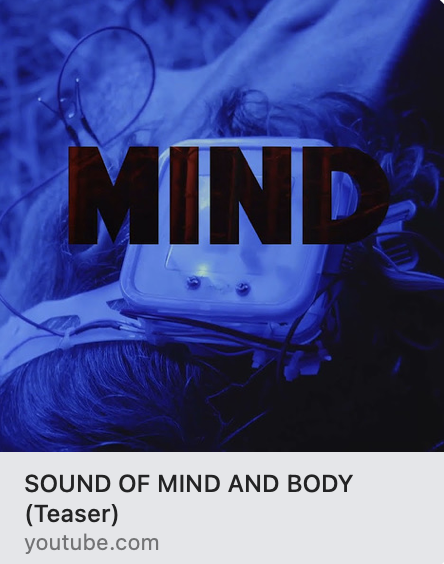
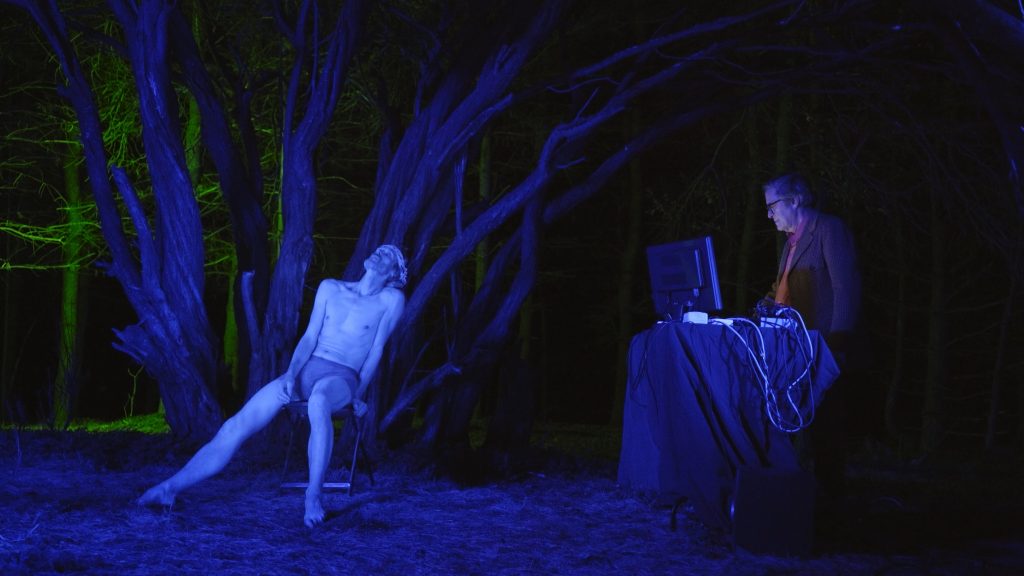
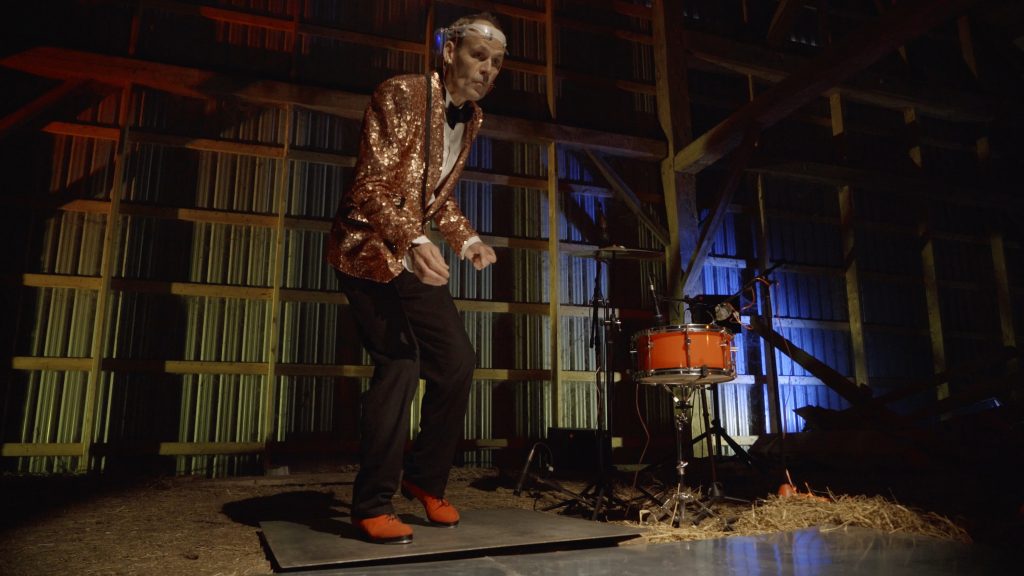
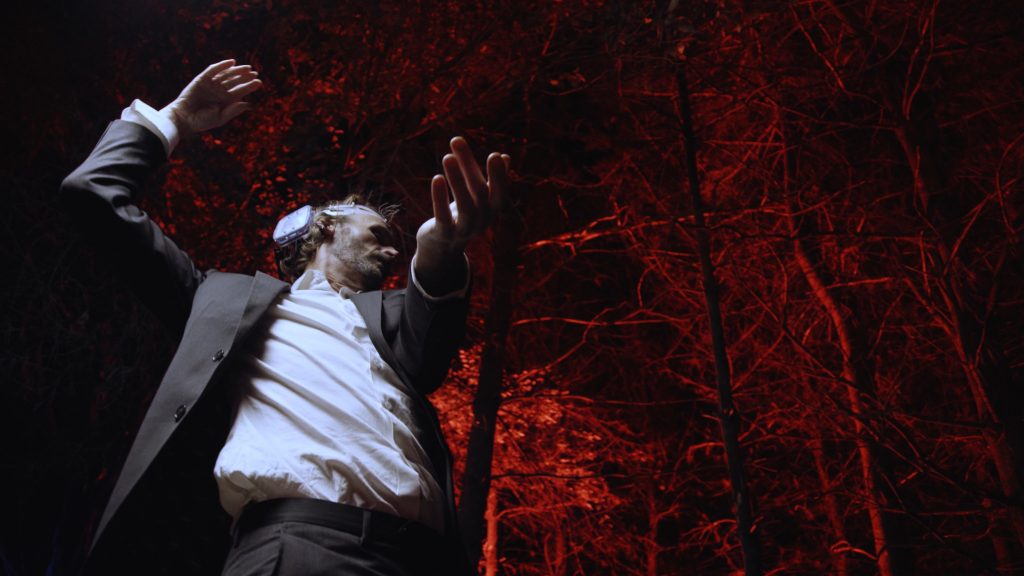
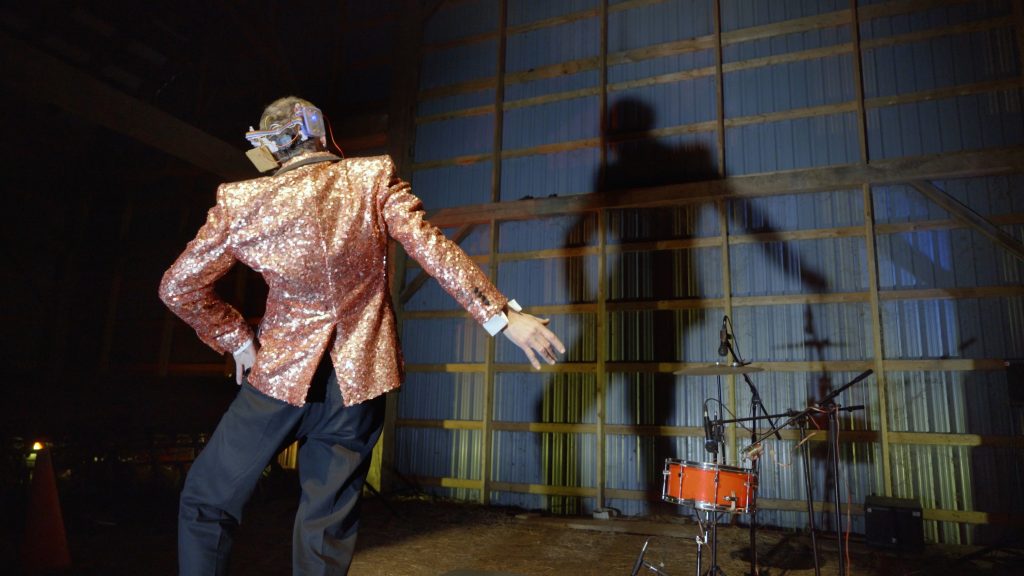
Mind-controlled software harnesses a performer’s brainwaves to sculpt sound, light, kinetic actions, and musical composition while they move and dance. The film captures a unique brainwave-influenced improvisation, where neural impulses trigger chance-based algorithms, which then determine patterns and combinations of sounds, musical notes, and light pulsations. Sound of Mind and Body is a cinematic exploration of right-brain, left-brain symbiosis, where logic combines with emotion and technology combines with the organic.
Production year: 2025
Format: UHD, 16:9, colour
Sound: 5.1, stereo
Duration: 15:27
Directed by Gordon Monahan and Bill Coleman
Cinematography by Nika Belianina and Aleksandr Efremov
A preview of the full film is available by request, please send an email to mail (at) gordonmonahan.com
Also available on FIlmFreeway: https://filmfreeway.com/projects/4083246
click to view/download press kit
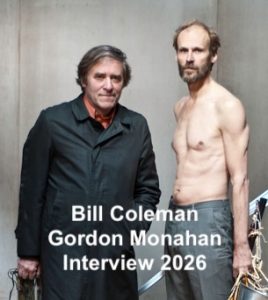
EXPERIMENTAL BRASIL 2026 INTERVIEW
Sound of Mind and Body
Gordon Monahan & Bill Coleman
Gordon, your practice spans piano, loudspeakers, kinetic sculpture, and computer-controlled sound environments across several decades. How would you describe your trajectory to someone encountering your work for the first time?
GM: I started out as a pianist and performer of contemporary avant-garde repertoire, and at the same time, I was pursuing an interest in exploring sound as an artistic medium. This led me to thinking of sound as a physical and sculptural phenomenon in addition to the traditional view that sound is primarily an element in music or audio. The logical trajectory of this viewpoint is to begin to define sound in physical forms as well as sonic or musical forms.
Bill, your choreographic work has taken place in theatres, international festivals, mountain tops, and fishing villages. What connects all these vastly different contexts for you?
BC: I guess the thing that connects all the various locations and contexts within which I work is my curiosity. Contemporary dance generally happens in large cities in fairly cloistered environments. I try to use dance as a way to see and feel the world around me. I don’t want to just work in theatres. So I try to place my work within more remote geographic and community settings.
How did the idea of capturing a brainwave-controlled performance in cinematic form come about? What was the starting point for Sound of Mind and Body?
GM&BC: Our work with brainwaves began when we were invited as artists-in-residence at the LiveLab which is a brainwave lab in the psychology department at McMaster University in Hamilton, Ontario, Canada. Since the beginning of our work with brainwaves, we always videotaped our performances as we developed them, and through this process, it was evident to us that the visual, sonic and performative aspects of the work would lend themselves to cinematic form.
Bill, alpha brainwave performances have historically relied on stillness and meditation. How did you develop the ability to generate and control these waves while dancing and moving?
BC: At the outset of the project, I was curious to observe the different brain states while I was moving. I had an intuition that when in deep embodied physical movement, brain activity would be different from more casual dancing or not dancing, which it is. When you are ‘lost’ in dance you sometimes trigger alpha waves. I then proceeded to explore how to elicit strong alpha waves almost instantly like the flicking of a switch. I then combined these ways of triggering alpha wave activity with the carrying out of the various improvised dance sequences which you see in the film.
Gordon, how was the mind-controlled software developed and calibrated to translate Bill’s neural impulses into sound, light, and musical composition in real time?
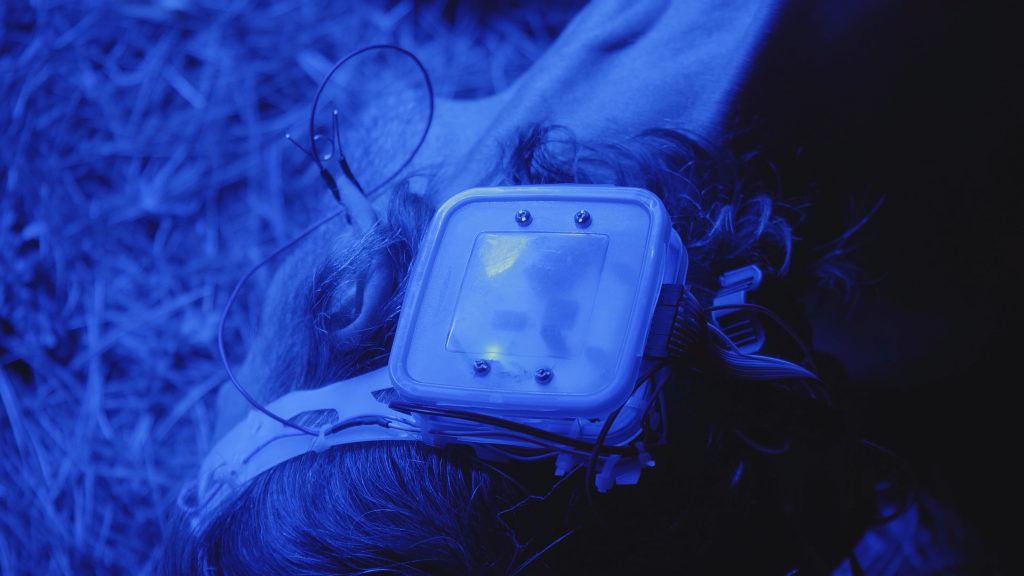
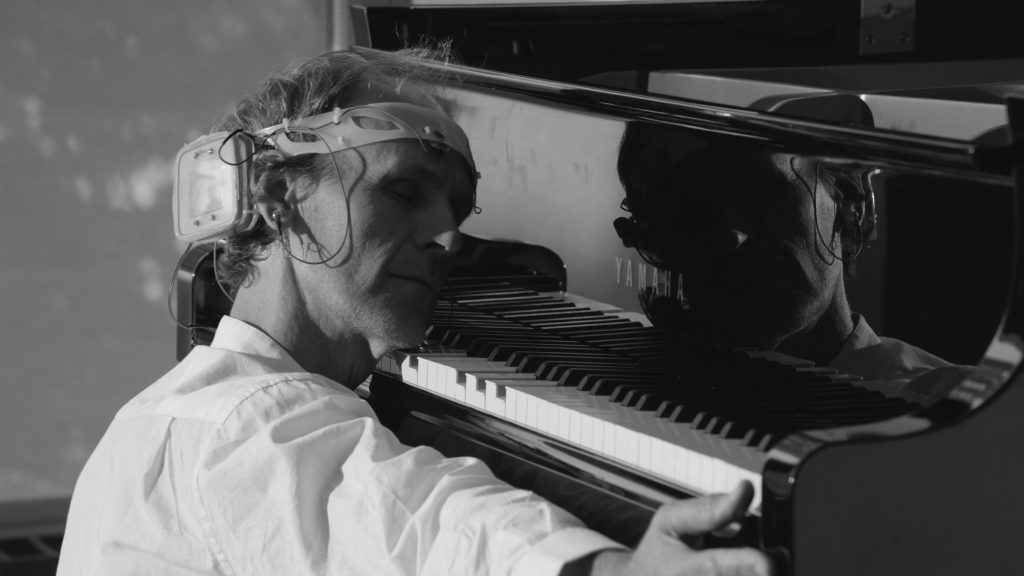
GM: I use a software program called MaxMSP, which is an object-based programming language used by artists to create customizable interactive performances and installations. The program receives brainwaves in realtime from Bill’s headgear. Once the stream of brainwaves enters the program, you can direct it to control a wide variety of sound, light, and compositional processes, but the interaction to these processes have to be create from scratch in the program. The software programming question is how to take the brainwave data stream and have it control specific parts of the software that you’re building. For instance, in some scenes in the film, Bill’s brainwaves are amplified directly into sound by transposing the brainwave streams into the audible spectrum, so we can then listen to Bill’s brainwaves directly. The musical pitch or frequency of the sound is controlled by the amount of concentration that Bill is imparting into his brainwaves. So, Bill directly increases the loudness and pitch of the brainwave sound that we’re hearing, and at the same time fades the lights in and out by his mental concentration.
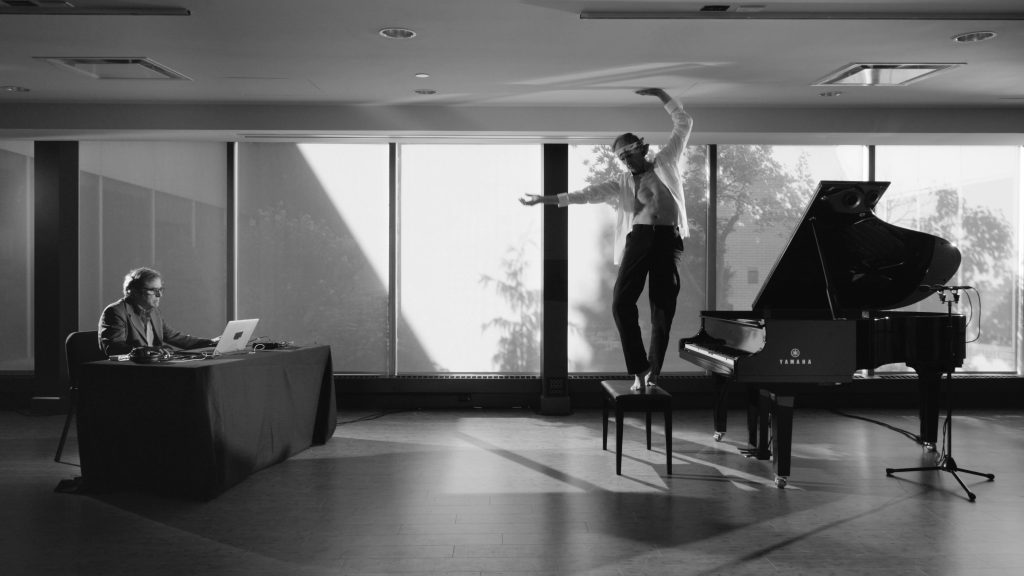
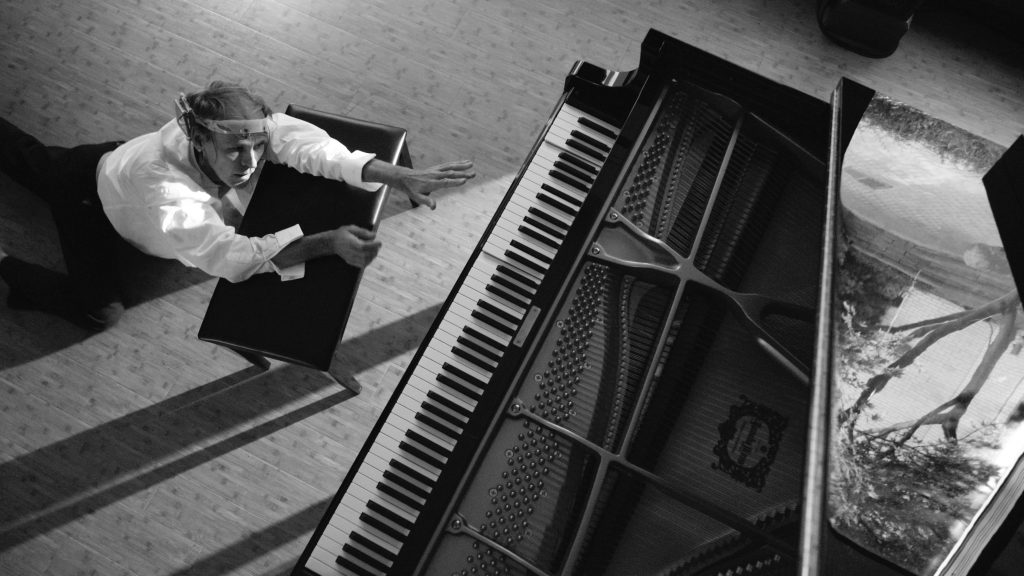
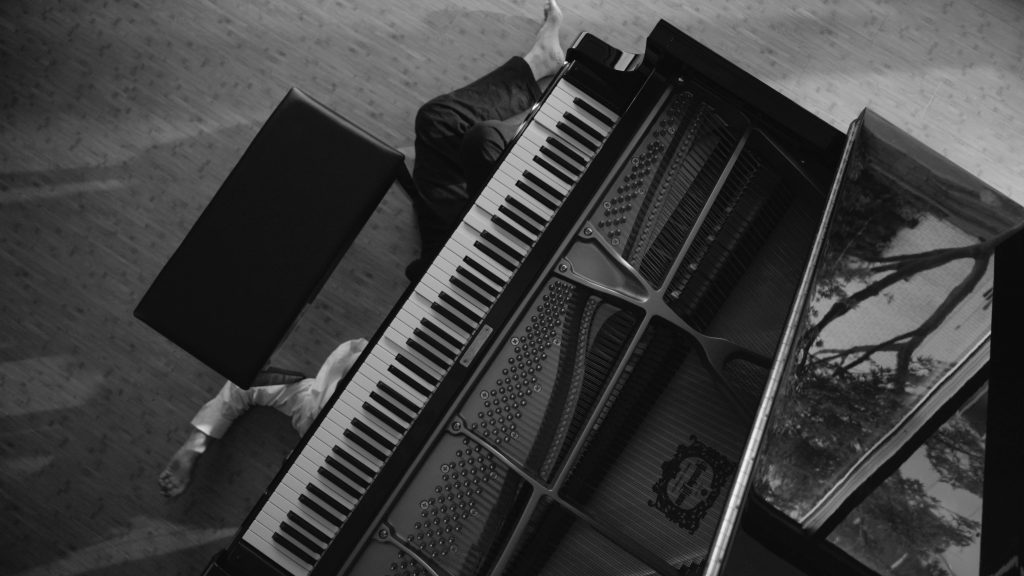
A different software process allows Bill to affect musical composition in real time, for instance in the scene where his brainwaves play the piano. The software that I developed maps his brainwaves across different spans of the piano keyboard at different times in the scene. At the same time, his brainwaves interact with the software to control how often he plays notes within those keyboard ranges, and the pitch of each note is determined in a quasi-random fashion within those note ranges. His brainwaves also control the speed of notes to be processed at any given time, and that determines the rhythm and tempo of the piano composition.
We decide on a simple structural outline of the composition in advance. For instance, that he will begin playing the high notes of the piano at a soft volume or dynamic, and then gradually expand down the keyboard and grow louder over time. But that is the only part of the composition that is decided ahead of time. His brainwaves control how quickly that composition unfolds, and also how many notes, and which specific notes, are being played at any given time. Our decision to predetermine a simple overall form of the musical composition results in the cohesive musical composition that you see and hear in the film.
The film navigates the relationship between logic and emotion, technology and the organic. In practice, how did you balance these elements during the creative process? Was there tension between technical control and room for improvisation?
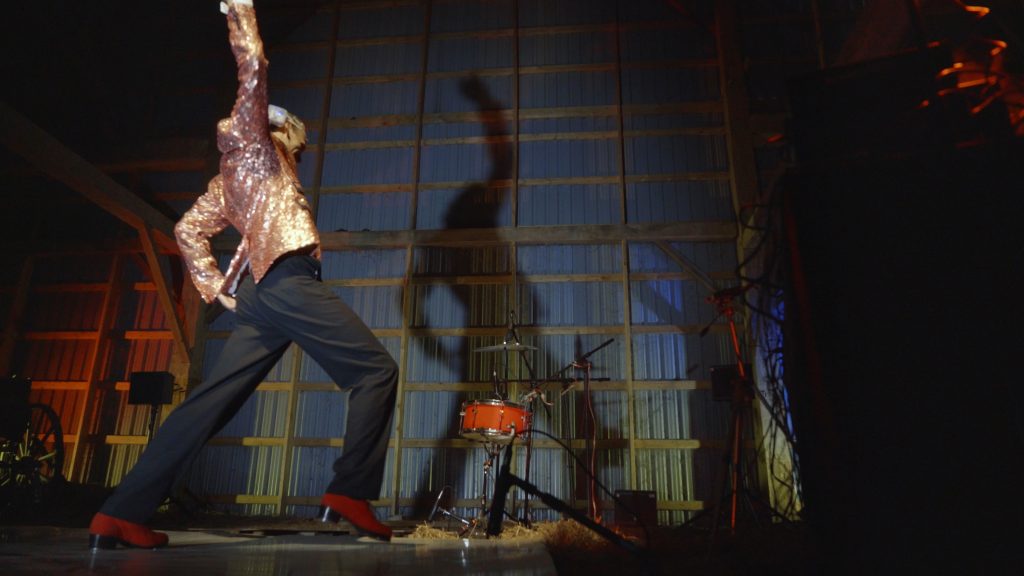
BC: I interfaced with the technology by feeling or dancing with the outcomes of Gordon’s various processes (the flickering blue light, spinning sound and the instruments). I try to create a sensual relationship with that end of the technology. I feel it’s important to create a contrast to all the hardware by being as human as possible.
GM: We intentionally create a push-and-pull contrast between technological and organic worlds. Over the years, we have often situated our individual and collaborative pieces in natural outdoor locations or industrial sites, in addition to traditional concert halls or theaters. There is a strong impact when you place technological elements in nature, due to the ironic juxtaposition of the technological and the organic, and the immediate visual and scenic impact that natural settings offer. This inherent tension created between nature and technology is something that we’ve learned to work with to our advantage over many different types of projects over many years. We’ve learned to exploit this tension within our creative and improvisational approach.
Chance-based algorithms determine sound and light patterns triggered by neural impulses. How much of that unpredictability did you choose to preserve in the final edit of the film?
GM&BC: We filmed multiple full takes of each scene, and since the sound and music produced varied each time we performed each scene, we had to choose shots from each take that would combine together sequentially to form a comprehensive musical composition, while also adhering to the visual progression of each scene from beginning to end. So while there are some random and unpredictable aspects to what sounds are being produced and when, there is an overall sound and movement structural logic to each scene. For instance, when we perform the piece live, each performance can be quite different from each other, but the overall structure is the same with regards to what sound processes and movements are taking place during each segment of each performance.
You have been collaborating for decades across dance, music, and multimedia. How has this long-standing relationship shaped the specific cinematic language you built for this film?
GM&BC: We’ve each done a wide variety of artworks over the years, including performances, installations, and with film and video. Each of our collaborative pieces are actually quite different, and so we’re used to constantly changing and adapting to each other’s ideas as we work through our projects. For this film, we hired two cinematographers to work with us, Nika Belianina and Aleksandr Efremov, who did a great job with lighting and determining how to shoot each scene, which contributed to the overall cinematic language that we ultimately formed through the final editing and post-production.
Proprioception is central to Bill’s creative process.
Gordon, how did that understanding of movement and physical space inform your sonic and visual decisions?
GM: Bill’s internal cohesion between his mental and physical states are solely his artistic domain, although his resulting physical movements combine seamlessly with the sound and lighting processes because we have intentionally integrated his mental consciousness with the sonic output, and this connects naturally with the physical and visual space and movement. At the same time, we are both conscious of how the sound is moving and embodying the physical space as we perform in it, so although sound is an invisible medium, we are always visualizing the physical embodiment of the sound in the space as we perform.
Your projects have unfolded on prairie landscapes, remote mountain tops, museums, and concert halls around the world. How does the choice of space shape the work, and what guided the visual and architectural decisions in this film?
GM&BC: For the film, we decided to use locations that were visually interesting but also not representational of theaters or concert halls. We chose the specific locations partly out of practicality, since our film budget was small, we had to make location choices that were easy for us to access and also inexpensive, but at the same time, visually interesting.
Gordon, John Cage once said you produce sounds we have not heard before. Which artists, composers, or thinkers were decisive in bringing you to that place, and which ones still inhabit your work today?
GM: Aside from Cage himself, I have always been influenced by David Tudor, Alvin Lucier, Michael Snow, James Tenney, and Marcel Duchamp, and I continue to revisit their work and writings to this day. In addition, I take inspiration from Tony Conrad, Jack Smith, Lary 7, Trimpin, and my partner Laura Kikauka.
Bill, which references from choreography, cognitive science, or any other field continue to be living sources for the way you think about body, mind, and movement?
BC: Sources or inspirations are in general my peers in dance with whom I have ventured into this area. Dancer Carol Prieur and teacher Linda Rabin from Montreal as well as dancer turned researcher Coralee Maclaren.